

Parking OGS-HGS Systems
Parking OGS-HGS Systems
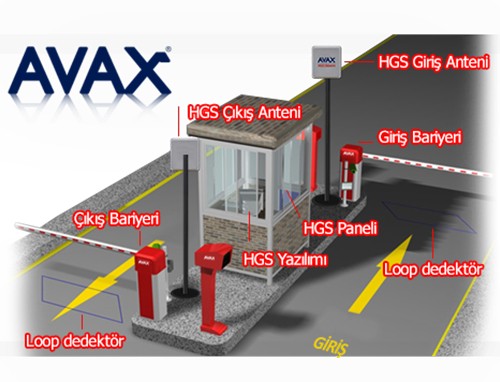
Parking HGS access systems, designed to make car park entries and exits faster and safer, are becoming more and more important. In apartment buildings, residential complexes and workplace car parks in particular, you can let the vehicles you have approved in advance pass quickly while keeping visitor or unknown vehicles under control.
The units that make up the automatic access system are the parking barrier, the OGS-HGS parking antenna, the automatic vehicle access control panel, the vehicle windscreen and plate tags, and the car park entry-exit software.
The units that make up the automatic access system are the parking barrier, the OGS-HGS parking antenna, the automatic vehicle access control panel, the vehicle windscreen and plate tags, and the car park entry-exit software.
How Do Parking OGS and HGS Systems Work?
UHF antennas able to read up to 50 metres are installed at the car park entrances and exits. OGS / HGS sticker paper or plastic tags are issued to the vehicles allowed through. These tags are registered in the car park vehicle access control program together with the plate, vehicle registration details, owner details and other information. The registered vehicle data is sent to the car park access control panel over a TCP/IP connection.
The system is now ready for use: the parking antenna sees a vehicle carrying a registered tag and sends a trigger to the parking barrier, letting the vehicle enter or exit quickly without having to stop. Unknown or guest vehicles without a registered OGS-HGS tag cannot pass. You can review the products that make up this system below and call our company to ask for a price quotation for the system best suited to you.
The system is now ready for use: the parking antenna sees a vehicle carrying a registered tag and sends a trigger to the parking barrier, letting the vehicle enter or exit quickly without having to stop. Unknown or guest vehicles without a registered OGS-HGS tag cannot pass. You can review the products that make up this system below and call our company to ask for a price quotation for the system best suited to you.
OGS-HGS Automatic Parking Barriers
OGS (Automatic Pass System) and HGS (Fast Pass System) can provide reports while allowing authorised vehicles to enter and leave the car park quickly. OGS and HGS tags or devices are placed on the vehicle's windscreen and read by sensors at the passage points, so vehicles can pass without stopping.
OGS-HGS automatic parking barriers are systems that use this technology to automate car park entries and exits. These systems offer a faster and more effective method that does not require vehicles to stop and pay manually on the way in and out. Parking barriers open and close automatically by reading the OGS or HGS tags of the vehicles. This requires less manpower for car park operators and provides a more comfortable experience for users.
Car park fast access systems are generally preferred in areas with heavy car park use such as shopping centres, airports and business centres. Because installing, configuring and operating OGS-HGS automatic parking barrier systems is technical work that requires expertise, it is carried out by Mavalock, one of the professional companies serving in this field. The systems can be customised according to the size of the car park, its throughput and its needs.
OGS-HGS Parking Vehicle Identification Antenna and Access Control Panel
The UHF (Ultra High Frequency) Parking Vehicle Identification System Antenna is a technology generally used in car park management systems. This system is designed to identify and record vehicle entries and exits at car parks automatically. Using radio waves operating at high frequency, UHF antennas can read the UHF tags (RFID tags) fitted to vehicles in advance. In this way, parking barriers or gates can open and close automatically when they detect a registered vehicle, giving vehicle owners a faster and more comfortable passage.
Key Features of the UHF Parking Vehicle Identification Antenna
- Long-range reading: UHF systems have long-range identification capability, generally able to read vehicle tags from a few metres to tens of metres. This allows vehicles to pass quickly without having to stop.
- High-speed identification: The system can identify even moving vehicles quickly, which helps car park entries and exits run smoothly especially during peak traffic hours.
- Automatic charging: Through UHF tags, the time a vehicle spends in the car park can be calculated automatically and charged accordingly. This reduces manual work and speeds up the process.
- Security and access control: The system increases security by allowing only authorised vehicles into the car park. It also collects data about car park use, giving operators valuable insight.
- Flexibility and scalability: UHF systems can be adapted easily to car parks of different types and sizes. The system can be extended or updated as needed.
UHF Parking Vehicle Identification Systems are used effectively in shopping centres, airports, business centres, residential complexes and many other places. These systems play a critical role in simplifying car park management, improving the user experience and increasing operational efficiency.